Stephen Jones & the Dallas Cowboys: From Splash to Caution

15
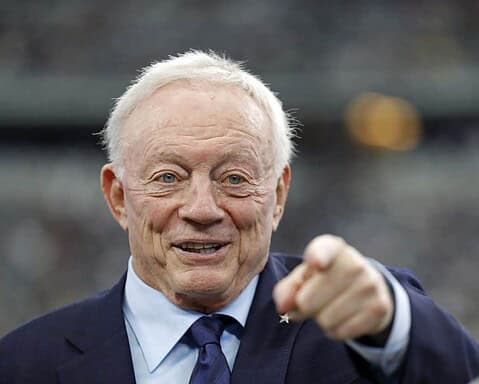
Stephen Jones
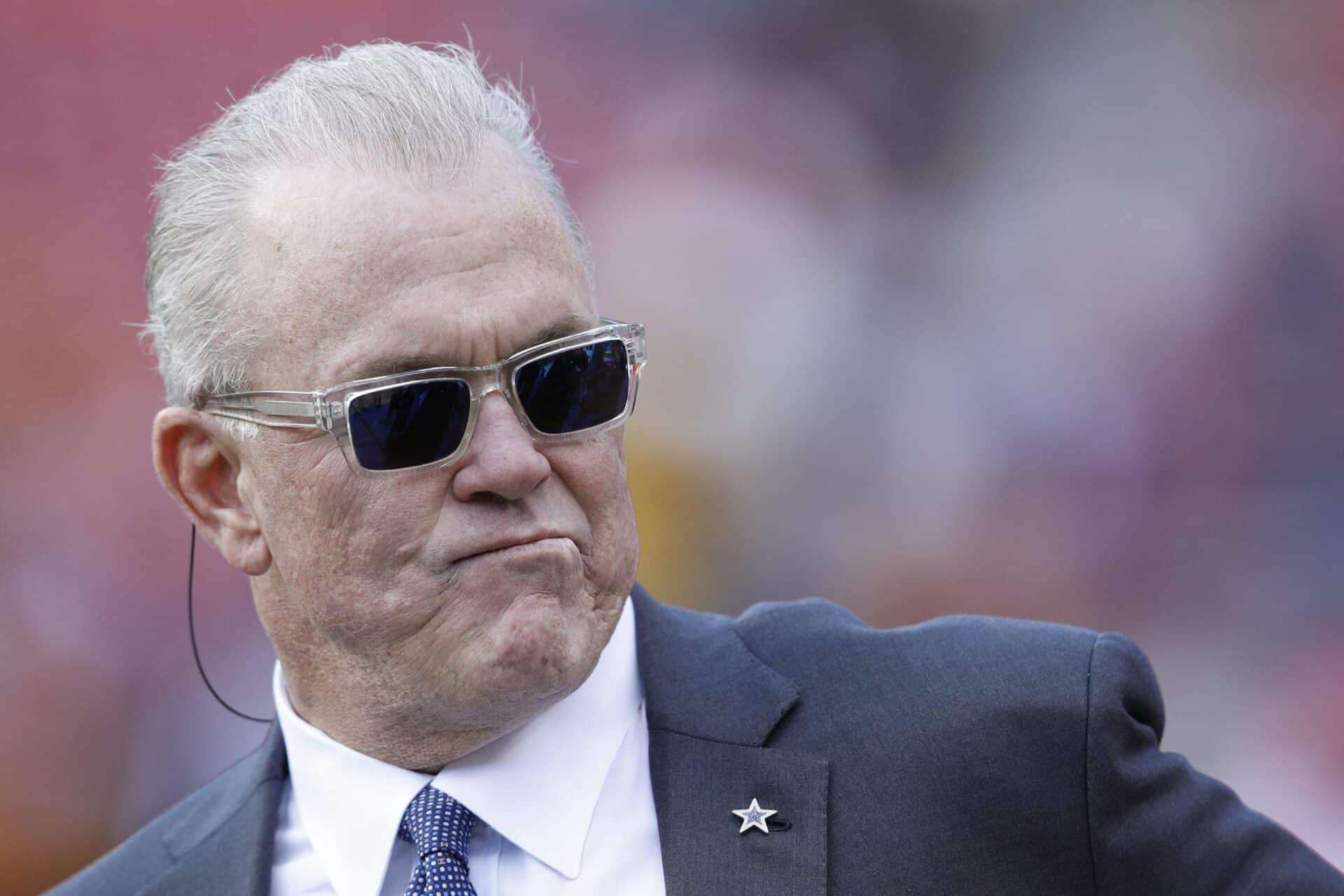
LANDOVER, MD - OCTOBER 21: Dallas Cowboys chief operating officer Stephen Jones looks on before the game against the Washington Redskins at FedExField on October 21, 2018 in Landover, Maryland. The Redskins won 20-17. (Photo by Joe Robbins/Getty Images)

The Dallas Cowboys have been NFL mainstays for decades, but their postseason success hasn’t matched their profile, thanks Stephen.

Since their last Super Bowl in 1995, the team has cycled through coaches, quarterbacks, and coordinators with no real breakthrough.

The hidden root of the problem? Stephen Jones’s rise to power in the front office.

From salary cap control to contract negotiations and free agency philosophy, Stephen’s cautious approach has reshaped the Cowboys, keeping them stable but rarely championship-caliber.

Stephen Jones and the Dallas Cowboys: From Splash to Caution

The Shift From Splash to Caution

While Jerry Jones remains the owner and public face, Stephen has become the real architect behind the team’s strategy.

His style is defined by:

  • Avoiding expensive free agents
  • Delaying contract extensions
  • Draft-focused roster building
  • Minimal external voices in decision-making

But in the modern NFL, teams do not win with this mindset and strategy.

Stephen Jones and the Dallas Cowboys: From Splash to Caution

Stephen Jones’ Costly Decisions

Let’s look at specific decisions that shaped the current Cowboys, and why they reflect a pattern of missed opportunities.


1. Dak Prescott’s Contract Delays (2018-2024)

Stephen refused to extend Dak early in 2018-2019, instead tagging him in 2020 and again in 2021, only to give him a four-year, $160 million deal after his value exploded.

Then in 2024, Stephen signed Dak to another extension. By then, the QB market had risen again.

The impact of waiting cost Dallas more money over time and reduced flexibility to improve the roster around Dak in his early prime.


2. Amari Cooper Traded for Pennies (2022)

The Cowboys traded wide receiver Amari Cooper to Cleveland for a fifth-round pick, a decision driven by “cap concerns”.

Cooper still had elite WR1 ability and a strong chemistry with Dak.

The impact of the trade left CeeDee Lamb without support and slowed the offense.


3. Overpaying Ezekiel Elliott (2019), Then Cutting Him (2023)

Zeke received a massive six-year, $90 million extension, then rapidly declined in efficiency.

He was released in 2023 with over $11 million in dead cap space.

The impact of this extension and subsequent release was misallocating resources and handicapping Dallas in other ways.


4. Letting Byron Jones Walk (2020)

An elite cornerback when used properly and the ultimate team player, Byron Jones was allowed to leave without a competitive offer.

His absence weakened the secondary for years.


5. Losing Randy Gregory Over Contract Language (2022)

A deal was agreed to, then Stephen inserted language Gregory didn’t like.

Gregory left Dallas and signed a contract with the Denver Broncos.

The impact left the Dallas Cowboys without a great pass rush weapon with DeMarcus Lawrence and Micah Parsons.


7. Signing CeeDee Lamb (2024)

One of the few recent wins.

Lamb officially signed a long-term deal in 2024, securing one of the league’s best wide receivers.

The issue is waiting to sign CeeDee Lamb increased the price of his contract, a common tactic of this front office since Stephen Jones took a more prominent role.

The impact was salary cap space as Lamb was signed after other receivers reset the market.


Culture is the Problem: No urgency, No Innovation

The Cowboys’ culture once Stephen Jones gained more control is one of calculated risk avoidance. That philosophy has fostered:

  • Stagnant postseason performance
  • Minimal coaching staff shakeups
  • No external GM or football czar voices
  • Over reliance on internal development

While other teams aggressively improve, Dallas stays in place—and gets passed up when it matters most.


Why the Cowboys Can’t Take the Next Step

In today’s NFL, the contenders:

  • Extend stars early
  • Use free agency to plug holes
  • Trade picks for proven players (George Pickens-type trades aren’t the norm)
  • Pay market value without hesitation

Dallas often does the opposite, and pays the price.

The Cowboys’ front office may look clean and efficient on spreadsheets, but the product on the field tells a different story: regular-season kings, postseason pretenders.


Stephen Jones Must Adapt or Relinquish Control

Stephen Jones has kept the Cowboys from bottoming out, but also from breaking through.

Until he brings in bold football minds, aggressively targets external talent, and shows urgency with his own stars, Dallas will remain stuck in neutral.

The Cowboys’ issues didn’t start with the coach or quarterback. They started when calculated caution became the franchise’s default identity.

Was this helpful?


Cody Warren is a sports journalist at InsideTheStar.com, where he has published 302 articles reaching over 1 million readers. He is a Law Enforcement Officer with nearly 20 years of professional service across multiple assignments, bringing investigative rigor and a commitment to factual accuracy to his Dallas Cowboys coverage.

15 Comments

  1. Longinus
    Wow, I've rarely seen more questionable and mistaken claims in one Cowboy article. 1) It implies that the 30 year drought for the Cowboys has been due to things like too much caution...except that didn't even begin until 2011. Before that, the Cowboys operated VERY differently. 1b) Not coincidentally, since the Cowboys made that change they have produced MUCH better teams than the mediocrity they suffered from 1996-2010, so...we have a bit of a logic fail by presenting something associated with major improvement above mediocrity as "bad" (maybe the Cowboys do a good job with rosters but aren't getting coaching right, which would still be the fault of the front office but not a roster building issue). 2) Did the Cowboys "refuse" to extend Prescott early, or did his agent refuse to consider anything beyond a massive overpay? Nobody, including the author, has any proof of the former, and given contract talks and actions since then the latter is more likely (but not a given). 3) The Cowboys were going to cut Cooper because his health kept leaving him not impactful enough in the playoffs and that didn't work given his salary. He had still been needed before than as WR1, but with Lamb's emergence they could make better use of that money elsewhere. Everyone knew Cooper was still a good player, but not really worth that salary...which is why no team was interested in trading more than a 5th rounder for him. Duh. If the Cowboys made a mistake with that, so did the ENTIRE NFL for not being willing to give up more to get him. 3b) Dallas's screwup wasn't in moving on from Cooper, but rather in committing to an injured Gallup for the WR2 role. Different issue, and every team makes mistakes like that. 4) It's pretty nervy how many people loved praising Elliott as an elite RB and "the engine of the offense", only to pretend after the fact that the Cowboys giving him the elite RB contract that goes with that was some obvious mistake. There were some people who were against the Elliott investment even on draft day, and they can say something, but most Cowboy AND NFL fans talked him up as what he ended up getting in his contract, which was also in line with what Gurley got the year before and McCaffrey the year after. 5) Hard to paint letting Byron Jones leave as a mistake in hindsight, and given how disinterested Dallas was in retaining him (unusual for how much they like to retain players like him) we have good reason to believe that they let him go precisely because they were worried he wouldn't hold up. Way to take a decision that was correct and paint it as a mistake; what a blunder! 6) Oh good, the author is repeating a mistake a bunch of people made immediately after Gregory signed with Denver that has since been corrected...no excuse for a screwup like that. For those who don't remember, the language in question *was also in Gregory's prior contract*, so it was nothing new or unexpected. If I remember this part right, it was his agent who misled Gregory into thinking Dallas was trying to pull a fast one on him; that's his fault, not Dallas's. And it went against Gregory's best interest; instead of him staying in the place that knew him well and had helped him overcome his struggles, he went to a new environment and his tenure there couldn't have gone worse. 7) The Lamb bit is a straight up lie. For one, the Cowboys have extended many major players early, so that part is cold hard falsehood. For another, all the guys who take longer so sign all end up with deals that are minor or notable overpays, almost as if the REASON they took longer to sign wasn't because Dallas chose to wait but rather because the players were demanding too much all along. Too many people fall for the clickbait on this...behind Door #1 is that the team just arbitrarily waits to sign players, to little benefit. Behind Door #2 is that players refuse fair offers and demand overpays, to their obvious benefit, and the team chooses to keep trying to negotiate a fairer offer (and maybe sometimes gets it) rather than give the complete overpay then and there. Which one makes a ton more sense? And ask yourself, why does the media keep promoting the view that makes no sense? Don't take this as some big praise for the front office; they have their fair share of screw ups. They too often accept a lack of depth in areas of concern, and too often they don't take even light shots at filling obvious weaknesses, e.g. recent inaction at WR2, usually minimal 1-Tech DT investment, not signing a Safety during a 3 offseason period when there were a bunch of quality ones on the open market ending up with cheap deals well after the opening FA rush, etc. But this article is just littered with unproven takes and even outright falsehoods. That's not good.
    1. Richard Paolinelli Author
      Richard Paolinelli
      My brother in Christ, just which one of Jerry Jones' offspring are you?
  2. VAM
    Glad they didn't sign the habitual problem, Gregory. He had just 3.5 sacks with two team in 2023 and didn't even play in 2024. I get the delayed signing part. Unfortunately, the Cowboy's front office has a good amount of dysfunction/delusion, starting with their very lofty opinion of their QB1.
  3. Edward Carmichael
    a Dallas Cowboys fan, since the 70's all the sports media groups fail to realize the reason the Cowboys was so good was because of both Tom Landry and Jimmy Johnson they know how to pick good talent through the N.F.L. draft they was in control after Jerry Jones fired Jimmy Johnson and Jerry Jones is now owner and G.M the Cowboys went down hill and Jerry Jones is trying to buy a super bowl ring and things won't get any better
    1. Cowboys fan
      Jerry didn't fire Jimmy, it was a mutual agreement for Jimmy to leave!! And even if that didn't happen, Jimmy was planning on leaving a couple months after that anyways, so no matter what, Jimmy was gonna be leaving!! And idk if you know this or not, but the coaches don't draft or sign free agents, that's what the front office does!! The coaches mite have input on certain players, but the front office decides on who to draft!! So all those players you think Jimmy brought in when he was around, that was actually Jerry!! Signing Deion Sanders, getting Charles Haley, it was all Jerry!! Like the article says Stephen took over more control of the team after the 95 season, and it's cause he got mad that Jerry signed Sanders to such a big contract and thought the team wouldn't like it, but ended up looking stupid cause the team loved the move and in turn they won the Super Bowl that year!! Stephen shoved Jerry up against the wall and everything for signing Sanders, but all Jerry said "was get out of my way, we have a Super Bowl to win!!" And that's exactly what happened!! It's because Jerry signed the players needed to win the Super Bowl.... Not Jimmy, or Tom Landry!! So like I say every time I reply to your comments, do your research, learn more about the team!! Don't come on here making comments about stuff you just heard other people comment about!! Cause all of the comments you make on here are always false!!
      1. Richard Paolinelli Author
        Richard Paolinelli
        Jerry fired Jimmy by mouthing off and making it impossible for Jimmy to continue. He may not have said the words: You're fired, but he clearly wanted Jimmy gone and made it happen.
  4. CowMan
    Too much truth!!! MICAH and Randy.. we really missed out.
  5. Dstar4
    No further commentary necessary. Awesome article!

Comments are closed.